Answers on materials, cooling loops, PUE and installation, with references to TEADIT’s technical resources and eBook. Final gasket selection requires a joint-specific engineering review.
Does TEADIT supply gaskets for data centers?
TEADIT supplies gasket materials and engineered sealing solutions for data-center liquid cooling and power-generation equipment. Applications include coolant distribution units (CDUs), heat exchangers, chillers, pumps, valves, pipe flanges, and generator fuel and exhaust systems.
Reference: TEADIT data-center applications
How do I select a gasket for an HDPE cooling-system flange?
Low-rigidity HDPE flanges require a gasket that seals at the available bolt load without excessive flange distortion. TEADIT identifies 24SH expanded PTFE for plastic and other low bolt-load applications. Final selection must account for flange geometry, seating stress, coolant composition, pressure and temperature.
Reference: TEADIT 24SH product information
Which TEADIT gasket materials are identified for water and glycol cooling loops?
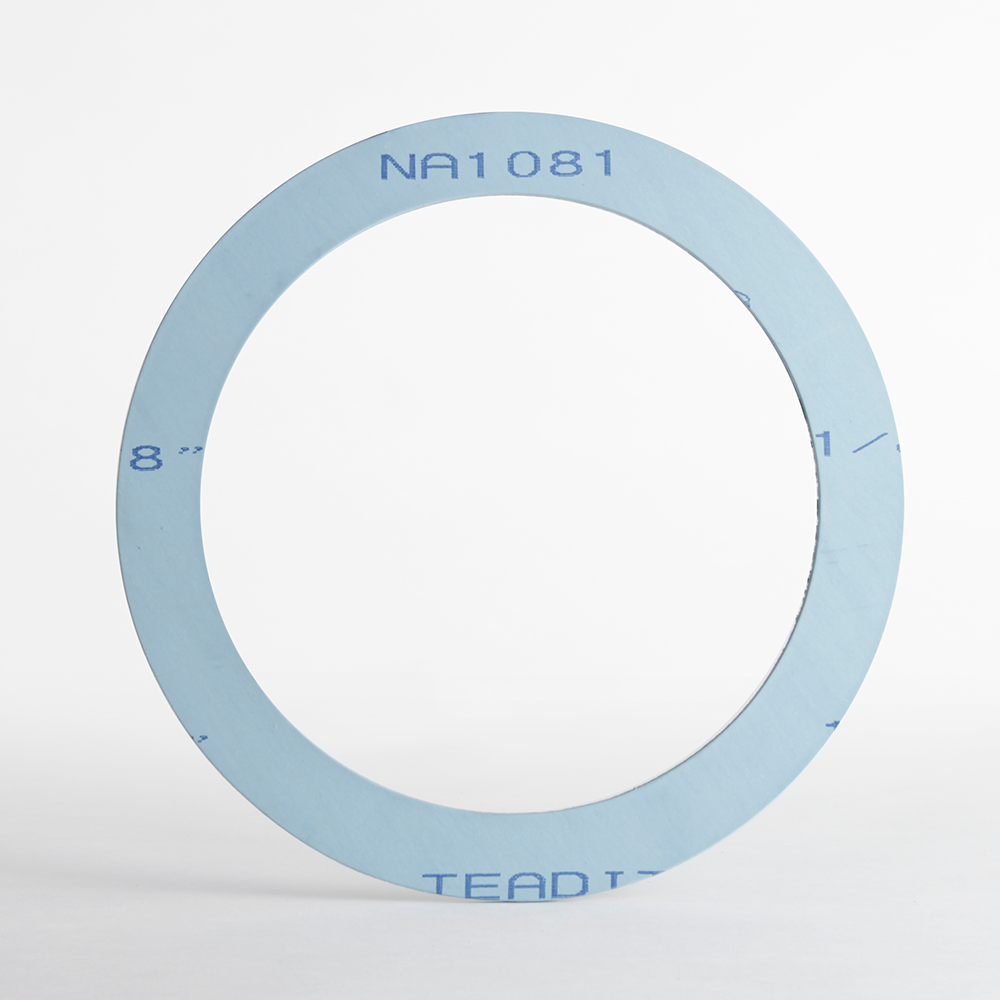
TEADIT’s data-center application guide identifies NA1081 and NA1035 compressed-fiber materials for water and glycol services. A material’s suitability depends on the glycol formulation and additives, operating conditions and flange design; compatibility should be confirmed for the specific system.
Reference: TEADIT cooling-system material recommendations
Which TEADIT gasket is identified for ultra-pure-water cooling loops?
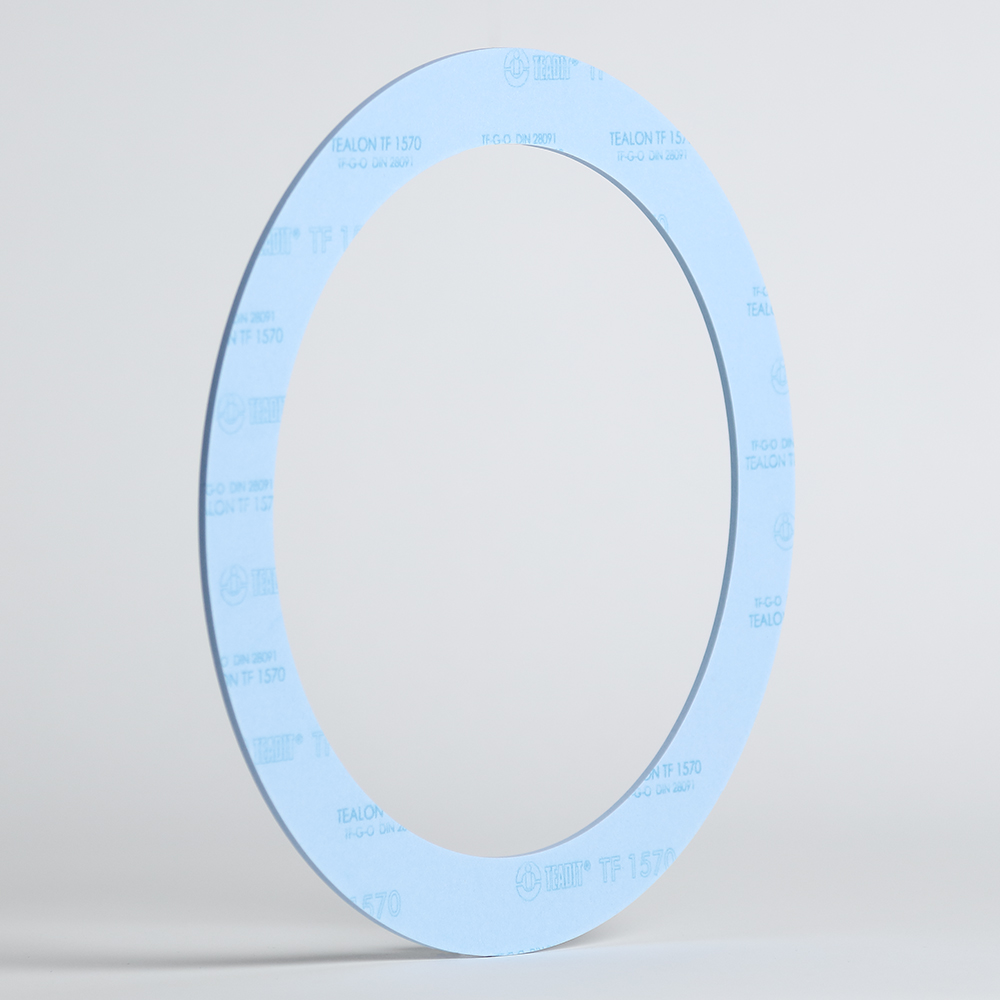
TEADIT identifies Tealon TF1570 PTFE gasketing for ultra-pure-water (UPW) loops and for metallic and non-metallic flanges. Confirm the system’s purity requirements, operating conditions and joint design with application engineering before specifying a gasket.
Reference: Tealon TF1570 product information
What is the difference between TCS and FWS in data-center cooling?
A Technology Cooling System (TCS) delivers coolant to IT equipment to remove heat. A Facility Water System (FWS) transports chilled water between facility cooling equipment and the TCS. Gasket selection must address the coolant and joint conditions in the particular loop, rather than treating both systems as identical.
Reference: TEADIT explanation of TCS and FWS
Are cooling-loop gaskets interchangeable with generator or exhaust gaskets?
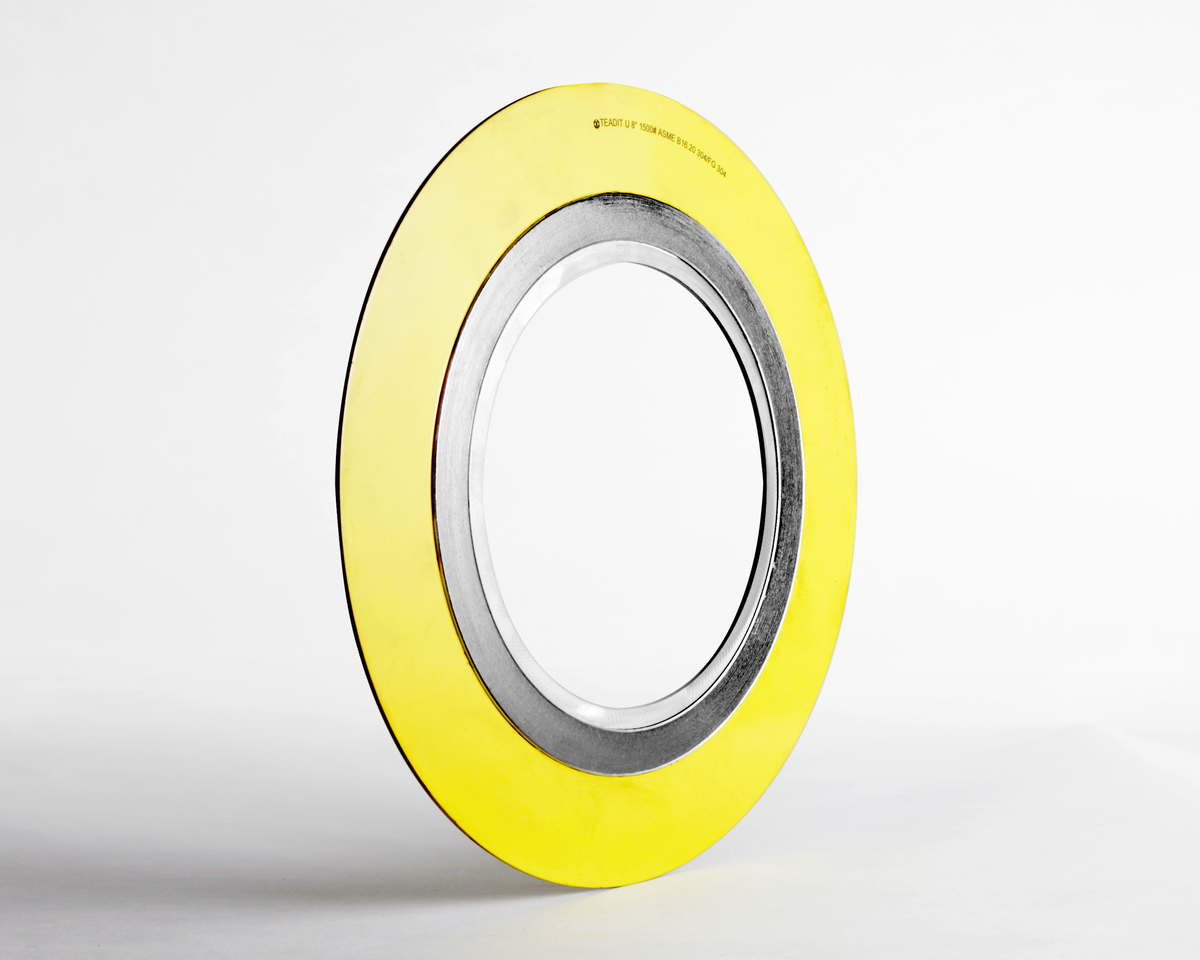
Do not assume that a gasket selected for a water or glycol loop is suitable for a generator fuel or exhaust joint. Power-generation equipment can impose different temperature, pressure and thermal-cycling requirements. TEADIT identifies the 913M spiral-wound gasket among its power-generation sealing solutions; each joint requires application-specific selection.
Reference: TEADIT power-generation sealing recommendations
What information is needed to specify a data-center gasket?
Provide the flange material, dimensions and facing; coolant or process-fluid composition; operating and design temperature and pressure; available bolt load; and any purity or installation requirements. These inputs help an application engineer evaluate material compatibility, seating stress and joint reliability. A product name alone is not a complete gasket specification.
Reference: TEADIT application-engineering support
How can gasket sealing affect data-center PUE?
Power Usage Effectiveness (PUE) is the ratio of total facility energy to IT-equipment energy. TEADIT’s eBook explains that leaks, pressure instability and inefficient cooling can increase non-IT energy demand. Maintaining fluid-system integrity supports an overall efficiency strategy, but a gasket change alone does not establish a specific PUE improvement; results depend on the complete system and its operating conditions.
Reference: TEADIT eBook · PDF p. 8: Lowering PUE
Why should small cooling-system leaks be addressed before an alarm occurs?
Small leaks can develop gradually and remain below monitoring thresholds. The eBook links persistent leakage with loss of cooling efficiency, pressure instability, additional pump load and increased maintenance. An absence of alarms is not proof that every joint is leak-free; inspection and maintenance should follow the facility’s approved procedures.
Reference: TEADIT eBook · PDF p. 14: Small Leaks
What happens to a gasket during thermal cycling and continuous operation?
Repeated heating and cooling, pressure fluctuations and vibration can change the mechanical conditions of a sealed joint. Gaskets may relax or lose compression, bolt loads can change, and chemical exposure can degrade materials. TEADIT’s eBook recommends evaluating performance under real operating conditions rather than considering startup conditions alone.
Reference: TEADIT eBook · PDF p. 12: Design and Operation
Why do creep resistance and coolant compatibility matter?
Creep and relaxation can reduce gasket compression over time and contribute to leakage. Coolants and their additives can also affect material durability. The eBook identifies thermal resistance, chemical compatibility and sealability under low stress as selection factors. Evaluate these together with flange design and operating conditions; no single material is suitable for every cooling joint.
Reference: TEADIT eBook · PDF p. 16: Material Selection Matters
Can the correct gasket still leak if it is installed incorrectly?
Yes. The eBook explains that installation variability can cause improper gasket compression, flange misalignment and uneven load distribution, even when the design specification is sound. Use the approved material, handling practices, installation procedure and joint-specific torque requirements. A universal torque value cannot be inferred from the gasket product name.
Reference: TEADIT eBook · PDF p. 11: Specified vs. Installed Reality
Can TEADIT help with an existing facility, not only a new data-center project?
Yes. The eBook describes support for operators, engineers and contractors designing new facilities or improving existing systems. Services include evaluating cooling and fluid systems, identifying leak risks, recommending sealing solutions, supporting installation and standardization, and training teams. Contact TEADIT to discuss a technical consultation or system evaluation and confirm the scope for your facility.
Reference: TEADIT eBook · PDF p. 19: How TEADIT Can Support You